ARFID in Adults: Understanding Adult-Onset Restrictive Eating


ARFID is a special eating disorder. It is not just "picky eating." Kids can have ARFID. Adults can also have it. It can start when you are young. It can also start later in life. This problem really affects how adults live. ARFID is different from anorexia or bulimia. People with ARFID do not worry about their body. They do not want to lose weight. I will talk about ARFID in adults. It has special problems.
Key Takeaways
ARFID is a real eating disorder. It is not just picky eating.
ARFID can start in childhood or adulthood. It greatly affects adult life.
People with ARFID do not worry about their body or weight. This makes it different from anorexia or bulimia.
Understanding ARFID in Adults: Symptoms and Manifestations
What is Adult ARFID?
I want to explain what adult ARFID is. ARFID stands for Avoidant/Restrictive Food Intake Disorder. It is a specific eating disorder listed in the DSM-5. This means it is a real medical condition. ARFID can affect people at any age. It can start in childhood and continue into adulthood. It can also begin when someone is already an adult. The DSM-5 gives clear rules for diagnosing ARFID. These rules help doctors understand if someone has ARFID.
For a diagnosis, a person must show a nutritional deficiency because they do not eat enough. They might lose weight. Adults with ARFID often lose weight. Sometimes, they need to use special liquid supplements to stay healthy. Their daily life and mood can also suffer. The eating problem is not due to another illness. It is also not about body image. People with ARFID do not worry about their weight or shape.
Core Presentations of ARFID
I see three main ways ARFID shows up. First, people have strong reactions to how food feels, smells, or looks. This is called sensory sensitivity. Second, they fear bad things happening when they eat. They might worry about choking or getting sick. Third, they just do not have much interest in food. These issues cause people to avoid or restrict what they eat. This means they do not get enough nutrients or energy. These arfid symptoms in adults are very real. The restriction is never about wanting to be thin. People with ARFID often have very strict eating habits.
Sensory Aversions and Food Avoidance
Many adults with ARFID have trouble with how food feels in their mouth. They might dislike certain textures. They also react strongly to taste, smell, or how food looks. Even the temperature of food can be a problem. For example, I know someone who cannot eat anything that is not crunchy. Another person might only eat white foods. These strong reactions make it hard to try new foods. They also make it hard to eat a variety of foods. These arfid symptoms make eating a challenge.
Fear of Eating Consequences
Some adults with ARFID avoid food because they are afraid. They might fear choking on food. Vomiting is another big fear. They worry about getting sick after eating. Some fear an allergic reaction, even if they have never had one. Other fears include stomach pain, nausea, constipation, or diarrhea. These fears are very strong. They make eating a very stressful event. These arfid symptoms in adults can lead to eating very few safe foods.
Low Interest in Food
For some people, ARFID means they just do not care about food. They do not feel hungry often. Food does not excite them. They might forget to eat. Eating feels like a chore. This lack of interest means they do not eat enough. They miss out on important nutrients. This aspect of arfid is different from the other two. It is not about fear or sensory issues. It is simply a low drive to eat.
Nutritional and Social Impact
ARFID can cause serious health problems. When someone does not eat enough, they do not get the right nutrients. This leads to nutritional deficiencies. Their body does not get what it needs to work well. This can affect their energy, their ability to focus, and their overall health.
ARFID also affects social life. Eating is a big part of social events. People with ARFID often avoid social gatherings that involve food. This can make them feel lonely. It can also strain relationships. I have seen how ARFID interferes with daily life. It can lower a person's quality of life. Many adults with arfid in adults also struggle with anxiety or depression. Getting help for ARFID can make social activities easier. It can help people enjoy going out with friends again.
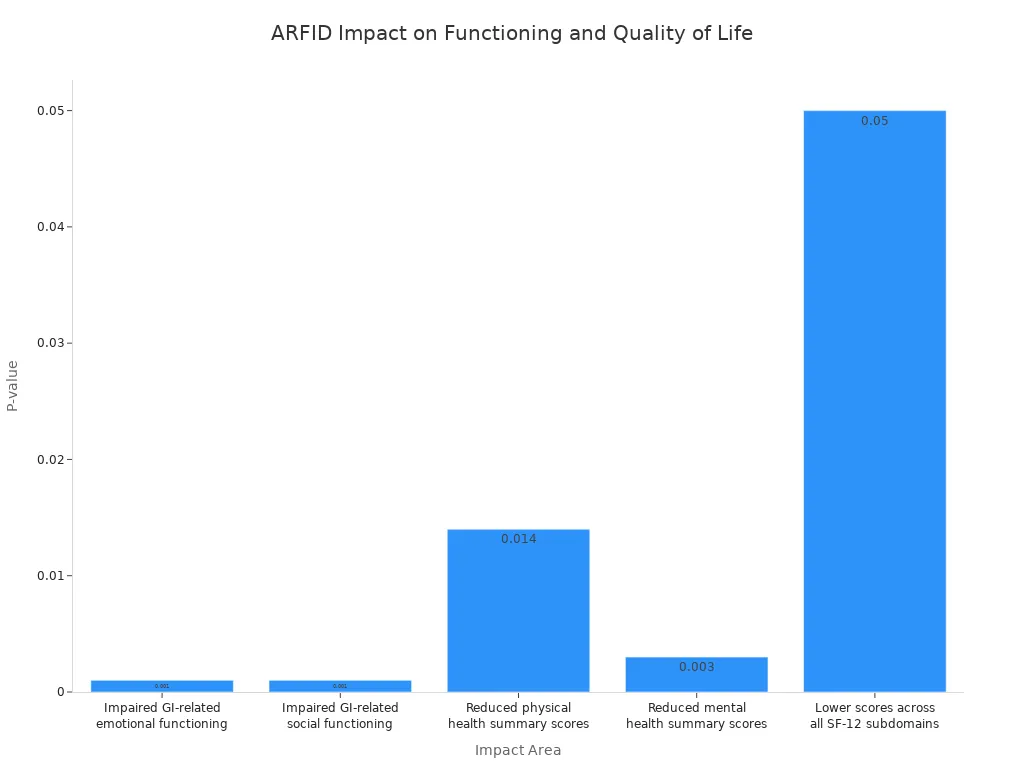
P-value | |
|---|---|
Impaired GI-related emotional functioning | <.001 |
Impaired GI-related social functioning | <.001 |
Reduced physical health summary scores | .014 |
Reduced mental health summary scores | .003 |
Lower scores across all SF-12 subdomains (vitality, role limitations, general health) | Not specified, but indicated as lower |
Causes, Diagnosis, and Treatment for Adult Avoidant Restrictive Food Intake Disorder
Factors Contributing to ARFID
ARFID does not just happen. Many things can cause it. These include our genes. Our bodies, minds, and culture also play a part.
My research shows ARFID runs in families. It is often passed down. It is like anorexia or bulimia. A big study is looking for genes. These genes might link ARFID to other problems. For example, being very sensitive might link to autism spectrum disorder (ASD). Genes for anxiety can also raise ARFID risk. This is true after a bad eating time.
A 2021 study found strong links. These links were between ARFID and other problems. This means genes might cause eating issues. The study showed a 21% overlap. This was between ARFID and ASD. Many people with ARFID also have ASD. This link could help us find people at risk.
Our minds also play a big role. High anxiety can make ARFID last. This is true for social anxiety. Depression can also keep ARFID going. If someone has more autism spectrum traits, their ARFID may stay. Being very sensitive to how food feels also predicts lasting ARFID. A big fear of new foods makes it harder to get better. This is called food neophobia. Bad past experiences with eating can also cause ARFID. Family habits can make ARFID worse. This is true if parents are very worried about food.
Psychological Factor | Contribution to ARFID Onset/Persistence in Adulthood |
|---|---|
Anxiety | More anxiety meant ARFID was more likely to stay. This was especially true for social anxiety. |
Depression | More signs of sadness meant ARFID was more likely to stay. |
Autism Spectrum Traits | People with more autism spectrum traits had ARFID that lasted longer. |
Sensory Sensitivity | Being more sensitive to how food feels meant ARFID was more likely to stay. This was true for textures and tastes. |
Food Neophobia | A strong fear of new foods meant ARFID was more likely to stay. |
Common Co-occurring Conditions
I often see other health problems with ARFID. These include autism spectrum disorder (ASD). Also, anxiety disorder and ADHD. Obsessive-compulsive disorder (OCD) is another. People with ASD and ADHD have a higher chance of ARFID. One study found 16% of people with ARFID also had ASD. About 11% of people with ASD also had ARFID. Other research showed ASD in 8% to 54% of kids with ARFID.
New studies show many adults with ARFID started as kids. About one-third of adults with ARFID also had bad OCD signs. Another third had likely PTSD. These problems make ARFID harder for adults.
Diagnosing ARFID in Adults
Doctors need experience to diagnose ARFID in adults. They know the rules for this eating problem. It is key to find a doctor who knows avoidant-restrictive food intake disorder. They use special tools. Two common tools are the Nine Item ARFID Screen (NIAS). The Pica, ARFID, and Rumination Disorder Interview (PARDI) is another. These tools help doctors understand eating habits. They also help with fears. This helps them make a correct diagnosis. Getting the right diagnosis for ARFID in adults is the first step. It helps people get the right help.
Multidisciplinary Treatment Approaches
A team of experts often treats ARFID. I call this a team approach. This team has therapists and dietitians. It also has medical doctors. Sometimes psychiatrists are on the team. They work together. They help with eating problems. They also help with nutrient shortages. They fix medical issues. They help with other mental health problems. They support patients. They check how bad symptoms are. They watch progress. They give personal help.
Dietitians are very important. They help people eat well again. They make sure patients get enough food. They also make sure they get enough nutrients. They help people eat more kinds of foods. This often happens through exposure therapy. Dietitians make meal plans. These plans think about how food feels. They help make eating a good experience.
Therapists use cognitive-behavioral therapy. They help patients change bad thoughts about food. They help manage worry about eating. They also help with how food feels. They teach new ways to eat. Therapists also help families. They help them understand worry and avoidance. Dialectical Behavior Therapy (DBT) can also help. It teaches skills for strong feelings. This can lower food-related worry.
Cognitive Behavioral Therapy for ARFID
Cognitive-behavioral therapy (CBT) is the main treatment for ARFID. It helps people change bad thoughts. It also helps with wrong beliefs. These thoughts lead to bad feelings. They also lead to bad actions. The main idea is that thoughts and feelings control what we do. So, if we control our thoughts, we control our actions. People with ARFID often worry about feared foods. Through CBT, they learn their fears are not true. Exposure therapy, based on CBT, helps people change thoughts. These thoughts stop them from getting over fears. It shows the client feared foods. This can be through smells or pictures. It can even be just thinking about them. Later, they taste them. We start with the least feared food. We move to the most feared. This makes eating less scary.
CBT for ARFID, or CBT-AR, is very planned. It first helps patients eat regularly. This means three meals and two to three snacks. They use foods they already like. A key rule is "volume before variety." This means eating enough to be healthy comes first. Then, CBT-AR moves to different parts. This depends on the person's avoidant restrictive food intake disorder.
For how food feels, patients learn about new foods. They describe them without judging. They try small tastes. Then they eat full amounts. If someone does not care about food, they learn to notice body feelings. Like hunger. For fear of bad things, doctors use a "fear hierarchy." This helps people get more used to feared foods. It helps them get used to eating.
CBT-AR, a special kind of CBT for ARFID, has four steps:
Stage 1: I help the client understand ARFID. We find out how it affects them. We also focus on getting to a healthy weight.
Stage 2: We plan for the next step. I also teach them about good food. This helps them meet their body's needs.
Stage 3: This is the main part of treatment. We focus on trying foods. This helps fight avoiding them.
Stage 4: We plan to stop problems later. We make a plan. We review tools for lifelong food learning.
Nutritional Rehabilitation and Exposure
Getting healthy food is a key part of ARFID treatment. My goal is to help patients get healthy. I also work to fix any missing nutrients. I help them eat more kinds of foods. This makes their diet better. I check all patients for low vitamins and minerals. I also look for medical problems. These come from not eating enough. If someone is too thin, or has medical issues, I focus on eating more food first. Then we work on trying new foods.
Exposure therapy is almost always part of ARFID treatment. It slowly brings in feared foods. This helps lower worry. It lets people eat more kinds of food over time. Common parts of CBT for ARFID include eating regularly. It also includes watching what you eat. It also includes exposure and stopping bad reactions. Learning to relax is also important. Trying new behaviors is too.
Exposure therapy often uses a "food exposure hierarchy." This is a list of foods. It goes from least scary to most scary. We work through this list slowly. This process includes thinking about the food. We talk about the steps. We practice ways to handle stress. We deal with bad thoughts. We also do real practice. This helps people get used to different foods. It helps with eating situations. This treatment helps people live without food worry. It guides and helps recovery.
I want to say again. ARFID is a serious problem. Adults can get help for it. It is not just being a picky eater. ARFID is not about how your body looks. It is important to notice it early. Get help from a doctor. You can get better. You can live a better life.
Get help from trained health experts.
FAQ
What is the main difference between ARFID and anorexia?
ARFID is not about body image. Anorexia wants weight loss. People with ARFID do not care about weight.
Can adults fully recover from ARFID?
Yes, recovery is possible. Adults can eat better. Their life quality can improve. This needs good treatment. It takes time and help.
Where can I find help for avoidant restrictive food intake disorder?
Find a team of experts. Look for therapists. Find dietitians. Find doctors. They must know about ARFID. They can help you.
See Also
ARFID Compass: Navigating Avoidant Restrictive Food Intake Disorder in the Future
Identifying Key Symptoms of Avoidant Restrictive Food Intake Disorder Today
