What Are the Common ARFID Symptoms in 2026?


Avoidant/Restrictive Food Intake Disorder (ARFID) is a special eating problem. It means someone does not eat enough food. This is not because they worry about their body. Research shows ARFID affects 0.3% to 15.5% of kids. I will talk about common ARFID symptoms. I will also share other signs in 2026. Knowing about this disorder helps people get help fast.
Key Takeaways
ARFID is a serious eating problem. People with ARFID do not eat enough food. This is not because they worry about their body.
ARFID has many signs. These include avoiding certain foods. People with ARFID may also fear choking or throwing up. They might not be interested in food.
ARFID can cause health problems. These include not getting enough nutrients. It can also slow down growth in children. It is different from picky eating.
Key Behavioral and Psychological ARFID Symptoms
I see many common signs of ARFID. These signs can look different. They appear in children and adults. Knowing these ARFID symptoms helps us. We can spot eating problems early.
Food Avoidance and Restriction Patterns
People with ARFID avoid certain foods. They often limit what they eat. Children often restrict food. This is because of how it feels. They dislike how it smells or tastes. They might fear choking. They may also fear throwing up. Sometimes, they are not hungry. They have no interest in food.
Adults with ARFID also eat less food. They might only eat foods. These foods have certain textures. I have seen adults. They fear what happens after eating. They worry about vomiting or choking. Their picky eating gets worse. It limits the foods they can eat. They might not try new foods. They need food made in specific ways.
Sensory Sensitivities and Aversions
Sensory issues are a big part of ARFID. People with sensory sensitivity avoid foods. They dislike certain tastes. They dislike textures or smells. They say bad foods taste very strong. Some adults say they are picky. They rate bitter and sweet things as stronger. Children are called "fussy" eaters. They are more likely to be "supertasters." This means they find bitter tastes very strong. This sensory experience is a key reason. It causes their eating struggles.
Fear of Aversive Consequences
A strong fear can cause food avoidance. People fear bad things after eating. I have seen this fear. Many people with ARFID have it. They fear choking. They fear vomiting. They fear food poisoning. One study found something. 31% of people with possible ARFID avoided food. They feared bad consequences. This includes different fears. It is not just choking or vomiting. But choking or vomiting fears are common. Many teenagers in treatment have them. It is a big factor in some ARFID cases.
Lack of Interest in Food or Appetite
A main part of this eating problem is disinterest. People lack interest in eating or food. I see that people with ARFID often do not feel hungry. They are not excited about food. This disinterest is a main reason. It causes their selective eating. It helps me tell ARFID apart. Other eating disorders involve body shape worries. Some ideas suggest problems. Appetite control in the brain contributes. This causes restrictive eating. An overly active fear system might also keep this going. It keeps the lack of interest in food.
Social and Emotional Impact of Eating
ARFID symptoms cause big problems. They affect social settings. For children, social events are stressful. Birthday parties, school lunches, family meals. They might avoid these situations. This helps them escape food anxiety. Mealtimes can cause anxiety. This happens for children and parents. It is not a time to connect. Children might show distress. They cry or refuse to eat. They often have few "safe" foods. Sometimes only 10 to 15 items. If safe foods are not there, they get upset. If food is made differently, they get upset. They might show physical signs of anxiety. Stomachaches or gagging can happen. This is when they face disliked foods. These physical reactions are real. They are not for attention. This can lead to big challenges. These include social anxiety and emotional distress.
Physical Manifestations and Differential Diagnosis of Avoidant Restrictive Food Intake Disorder
I see many physical signs. These signs show someone has avoidant restrictive food intake disorder. These signs help me understand the problem. They also help me tell ARFID apart. It is different from other health issues.
Nutritional Deficiencies and Growth Concerns
ARFID can cause serious health problems. I often see children with ARFID. They do not get enough vitamins. They lack minerals and protein. This lack of nutrients causes poor growth. It can also delay puberty. I have seen children get dizzy. They might faint. This is because of low blood pressure. They might also have a slow pulse. Dehydration is also common. Over time, their bones and muscles weaken. Girls might even stop having periods. For example, I remember a 14-year-old boy. He never ate fruit. He never drank fruit juice. He got mild anemia from this.
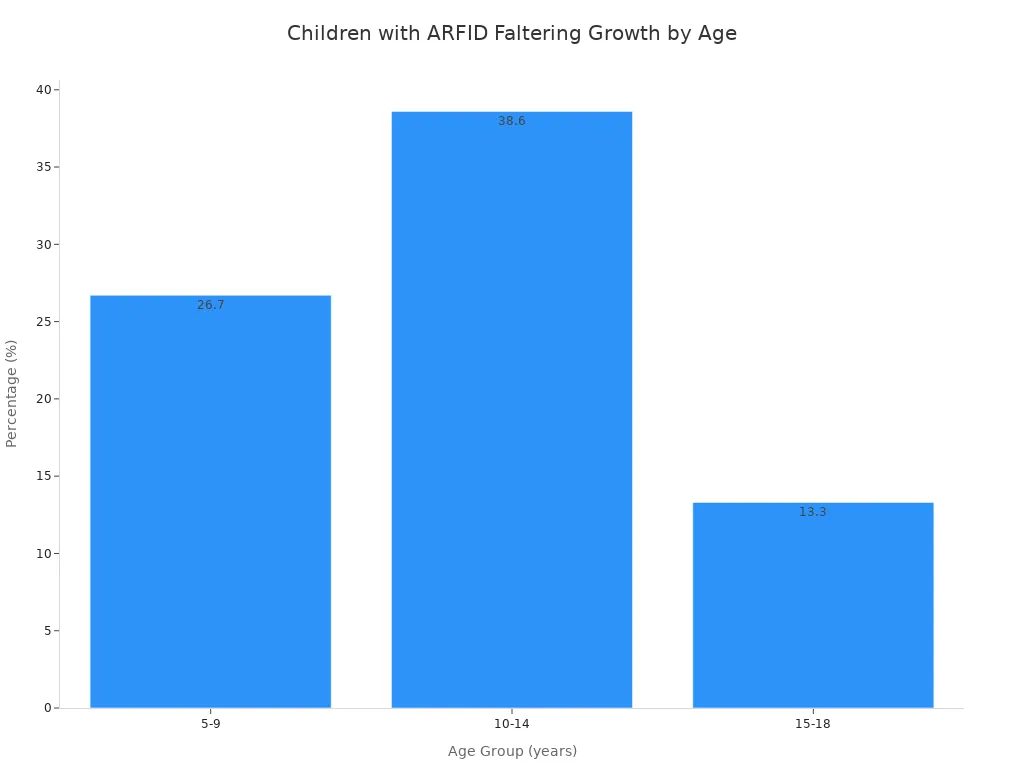
ARFID causes severe nutritional deficiencies. These problems hurt a child’s health. They include weight loss. They also include stunted growth. I have seen growth slow down. This happens in children with ARFID. The most children with slow growth were 10 to 14 years old.
Percentage of Children with Faltering Growth | |
|---|---|
5-9 | 26.7% |
10-14 | 38.6% |
15-18 | 13.3% |
Gastrointestinal Issues and Other Physical Signs
Sometimes, people with ARFID have stomach problems. They might have stomachaches. They might have constipation. Doctors cannot find a medical reason. These physical signs come from their limited diet. In serious cases, people need extra help. They need help to get nutrients. They might use nutritional supplements. Some even need tube feeding. This shows how serious their eating problem can be.
Distinguishing ARFID from Picky Eating
Many parents ask me about picky eating. They wonder if it is ARFID. I explain that ARFID is more serious. It is not like typical picky eating. Here are some key differences I look for:
Motivation: People with ARFID avoid food. This is due to sensory issues. They lack interest. They fear bad things happening. Picky eaters just dislike certain foods.
Weight and Growth: ARFID often causes much weight loss. Children might not gain weight. Picky eaters usually grow normally.
Nutritional Needs: ARFID causes real nutritional deficiencies. Sometimes, people need extra feeding. Picky eaters usually get enough nutrients.
Social Impact: ARFID causes much anxiety. This is around food. It makes social eating very hard. Picky eaters might just complain.
Emotional Distress: Children with ARFID often fight. They have meltdowns about food. This is not just annoyance. It is deep distress.
Puberty: ARFID can even delay puberty. This shows its serious impact.
This eating problem is more than food preferences. It deeply affects health. It affects daily life.
ARFID vs. Other Eating Disorders
It is important to tell ARFID apart. It is different from other eating disorders. I often compare it to anorexia nervosa. The main difference is why someone restricts food.
Reason for Restriction: With ARFID, people avoid food. This is because of sensory issues. They fear choking. They have no interest in eating. They do not worry about their body shape. They do not worry about weight. In anorexia nervosa, people restrict food. They fear gaining weight. They want to be thin.
Body Image: People with ARFID do not have body image problems. They do not think they are fat. People with anorexia nervosa often have a wrong view. This is of their body.
Weight: ARFID can happen at any weight. Someone can have ARFID. They can be at a healthy weight. They can be underweight. They can be overweight. Anorexia nervosa always means being underweight.
New Foods: People with ARFID often fear new foods. This is called food neophobia.
I also notice that ARFID can overlap. It can overlap with other conditions. For example, many people with Autism Spectrum Disorder (ASD) have sensory issues. This makes them picky about food. Studies show about 16% of people with ARFID also have autism. In some groups, this number is higher. For example, one study found 12.5% of Japanese children with ARFID also had ASD. This connection means we need to look at all factors. This is when someone shows arfid symptoms. This helps us understand their challenges. This is with selective eating.
I want to say again. Avoidant/restrictive food intake disorder is serious. It has clear signs. These are about how people act. They are about how people think. They are about their bodies. Finding it early helps a lot. If you think someone has ARFID, get help. Good ARFID treatment is out there. I know good ARFID treatment gives hope. It helps with avoidant restrictive food intake disorder.
FAQ
Is ARFID the same as picky eating?
No, I see ARFID is much more serious. It causes health problems and distress. Picky eating usually does not affect growth or nutrition.
Can adults develop ARFID?
Yes, I know ARFID can affect adults too. They might have had it since childhood. Or it can develop later in life.
What should I do if I suspect ARFID?
I recommend seeking professional help. A doctor or therapist can diagnose it. They can also guide you to effective treatment options.
See Also
Navigating ARFID: A 2026 Guide to Avoidant Restrictive Food Intake Disorder
